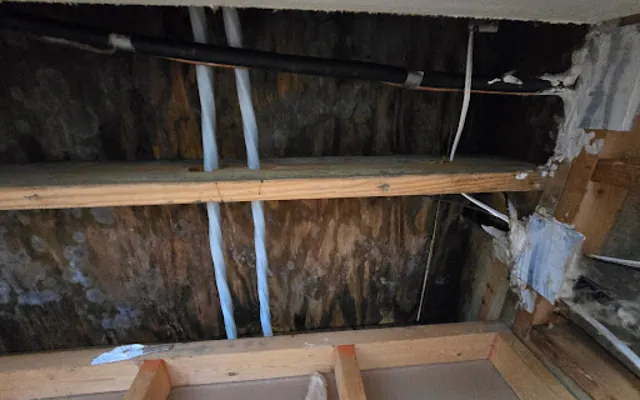
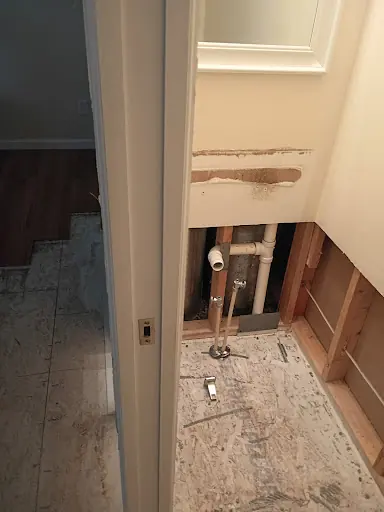
In Miami, attic trouble usually starts overhead, from a wind-driven roof leak or a sweating air handler tucked under the rafters. Trained crews respond around the clock, pull soaked insulation, and dry the framing before the humidity turns it into mold.

A technician arrives day or night, traces the water back to a roof breach or a failed condensate line, and isolates power to any wet attic wiring or the air handler before work begins.
Saturated batt or blown-in insulation holds water against the framing, so it is bagged and removed, exposing the joists and the back of the ceiling for a full moisture check.
Air movers and dehumidifiers are staged in the attic and the rooms below to pull moisture from framing, decking, and ceiling drywall, working toward a documented dry target.
Daily meter readings confirm the wood and drywall reach dry standard, and photos plus readings are logged for the insurance file before equipment comes down.

While help is on the way, these first steps, done only where it is safe, limit the damage and protect the insurance claim.
Shut the supply off at the source, or close the home's main valve if the source is not obvious. Stopping the flow limits the damage more than anything else.
Switch off electricity to the affected area, but only if the breaker can be reached without standing in or touching the water.
Get a crew dispatched right away. The sooner extraction and drying begin, the more flooring, drywall, and belongings can be saved.
Take photos and a short video of the water and the affected rooms before anything is moved, so the insurance claim starts strong.
Attic water damage in Miami commonly runs from about $1,200 to $5,500, depending on how much insulation is soaked, whether ceiling drywall has to come out, and if mold has already taken hold in the humid space. A small condensate drip caught early sits at the low end, while a storm-driven roof leak across several joist bays runs higher. Moisture readings and photos are documented from the first visit so the carrier can see the cause and extent clearly.
Crews reach Miami and Miami-Dade County fast, from Brickell, Little Havana, and Overtown to Coral Gables, Coconut Grove, Miami Beach, Key Biscayne, and Hialeah. See the full list on the areas served across Miami page.
See all areas servedEvery loss is photographed, measured, and logged from the first visit, so the paperwork holds up with the insurance carrier.
Technicians follow recognized IICRC drying standards and prove it with daily moisture readings on Miami homes, not guesswork.
Emergency dispatch any hour of the day or night, with a real crew on the way across Miami-Dade County, not a callback in the morning.
A real crew dispatched any hour, not a callback in the morning.
Trained technicians following recognized IICRC drying standards.
Truck-mounted, portable, and submersible for any size loss.
The loss is documented and billed to the carrier directly.
Two things dominate here. Wind-driven rain from tropical storms and heavy downpours works past aging roofs, and attic-mounted air handlers overflow when a condensate line clogs. Both soak insulation and ceiling drywall, and the hot, humid attic then invites mold if drying is delayed.
Usually yes. Wet batt or blown-in insulation loses its value and holds moisture against the framing, so it is removed and the joists are exposed for drying. Fresh insulation goes back once the wood and drywall test dry with a meter.
Quickly. Attic temperatures and the region's humidity create ideal conditions, and visible growth can appear within a couple of days of a leak. That is why fast extraction of wet material and verified drying matter more here than in drier climates.
It depends on the cause. A sudden roof breach or an appliance failure is often covered under a standard policy, while long-term seepage may not be. Moisture readings, photos, and source notes are documented from the start so the carrier has a clear record.
Drying and roof repair are separate steps. Crews stabilize and dry the attic, then a qualified roofing contractor handles the permanent fix so the leak does not return once the space is closed back up.
Miami crews are on call 24 hours a day, local and fast, and can be on the way within the hour.
Call (786) 460-9287