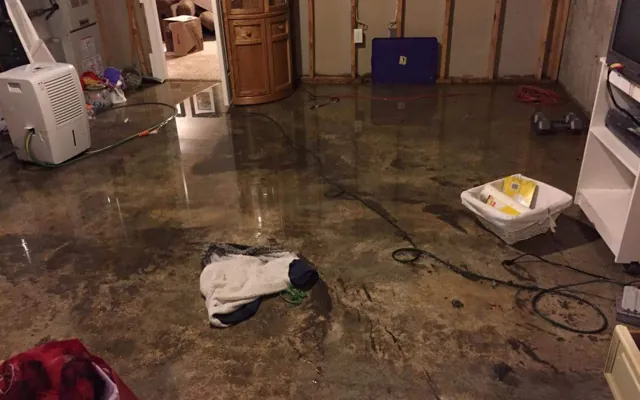
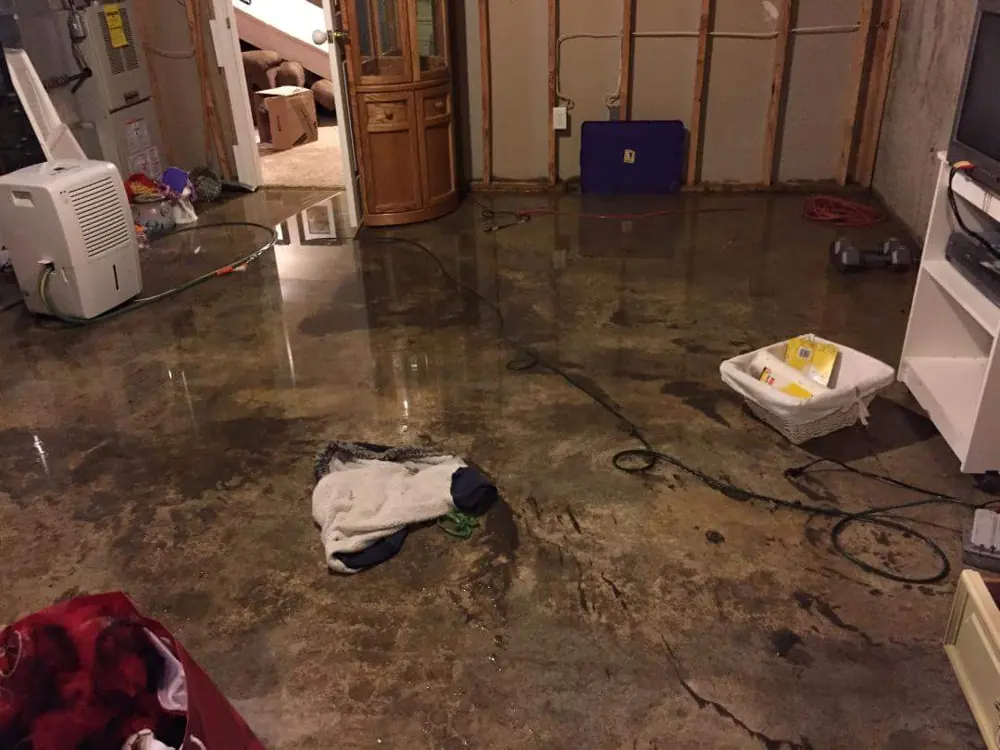
A failing water heater can leak slowly or let go all at once, flooding a garage, closet, or utility space. In Miami homes, local crews extract the water and dry the slab and walls before the humidity breeds mold.

A crew responds quickly, shuts the water and power or gas to the heater, and stops the flow before extracting the water around the unit.
Standing water is pulled from the garage, closet, or utility space and any adjoining rooms the water reached across the slab.
Baseboards and the shared wall base are checked and dried, and air movers with a dehumidifier dry the slab and framing to a verified target.
Readings and photos are logged for the insurer, and a qualified plumber is coordinated to replace the failed water heater.

While help is on the way, these first steps, done only where it is safe, limit the damage and protect the insurance claim.
Shut the supply off at the source, or close the home's main valve if the source is not obvious. Stopping the flow limits the damage more than anything else.
Switch off electricity to the affected area, but only if the breaker can be reached without standing in or touching the water.
Get a crew dispatched right away. The sooner extraction and drying begin, the more flooring, drywall, and belongings can be saved.
Take photos and a short video of the water and the affected rooms before anything is moved, so the insurance claim starts strong.
Water heater leak cleanup in Miami commonly runs from about $700 to $3,500, depending on whether it was a slow weep or a full tank rupture, how far the water spread, and whether it reached the living space. A contained garage leak sits low, while a rupture that flooded into adjoining rooms runs higher. A sudden tank failure is often covered by insurance, and the cause and extent are documented from the first visit to support the claim.
Crews reach Miami and Miami-Dade County fast, from Brickell, Little Havana, and Overtown to Coral Gables, Coconut Grove, Miami Beach, Key Biscayne, and Hialeah. See the full list on the areas served across Miami page.
See all areas servedEvery loss is photographed, measured, and logged from the first visit, so the paperwork holds up with the insurance carrier.
Technicians follow recognized IICRC drying standards and prove it with daily moisture readings on Miami homes, not guesswork.
Emergency dispatch any hour of the day or night, with a real crew on the way across Miami-Dade County, not a callback in the morning.
A real crew dispatched any hour, not a callback in the morning.
Trained technicians following recognized IICRC drying standards.
Truck-mounted, portable, and submersible for any size loss.
The loss is documented and billed to the carrier directly.
Signs include water pooling around the base of the unit, rust or corrosion on the tank, a drop in hot water, or a hissing relief valve. In a garage or closet, a musty smell or a damp shared wall can point to a slow weep that has been soaking materials for a while.
Shut off the water supply to the tank and cut the power or gas to it, then keep clear of any hot water. Call for extraction so the water does not spread across the slab into the living space, and a qualified plumber can handle the tank replacement.
Most tanks last around a decade, though Miami's humidity and mineral-rich water can shorten that. Once a tank is past that range, the risk of a slow leak or a rupture climbs, so an aging heater is worth watching and replacing before it fails.
A sudden tank failure is often covered under a standard policy, while a slow leak neglected over time may not be. The cause and extent are documented with photos and moisture readings from the first visit so you can present a clear claim to your carrier.
A contained water heater leak usually dries in two to four days, depending on how far the water spread and whether it reached the living space. Meter readings on the slab and wall base set the endpoint before the space is closed up.
Miami crews are on call 24 hours a day, local and fast, and can be on the way within the hour.
Call (786) 460-9287